If you had asked me what my dream life outcome would have been in my junior year of high school, I would have told you I wanted to run The New York Times. I developed a strong belief that the point of life is to unravel the mind of God by learning as much as possible about the world—to "Seek Truth and Help People Understand" it. Reporting felt like the most aligned career with which to do this, so I planned to go to Harvard, write for The Crimson, graduate, report locally for a bit, and eventually reach The Times.
This all changed when I published a piece with The Washington Post that got heavily edited. At seventeen, I was just happy to get published, so I acquiesced. I suspect this editorial approach to guest essays is standard at big papers, and this has become especially clear as I've observed topics I know intimately be grossly misrepresented. I want nothing to do with this.
As a jaded freshman, I considered law, but kept getting pulled back into startups. It felt closer to the truth-seeking I was after. I'd worked at an edtech startup in tenth grade and returned to that world freshman year of college, this time working on audio software before joining Prod, where I realized that forming a company was a way to pursue truth with more agency than a dying institution like The Times would ever allow me to.
My friend Anne, former Prod President, and an alumnus of The ever-fantastic Exonian, put it interestingly. She feels that companies are "learning machines."
"The purpose of a company is to learn about its environment.[1] [2] Companies are learning machines, and the best ones focus on extracting more information with less noise as fast as possible. This dynamic has always been true, and promises to become even more true because smaller teams increasingly generate outsized returns. This rising competitive pressure means organizations have an ever-shrinking margin for error in their information uptake rates. If you're planning on participating in the new world, the feedback loop is your primary product.[3]"
When seen this way, the result of starting a company is very much in line with what I wanted from journalism—to uncover more about the world and human nature. Anthropic and Cursor attempting to make the perfect AI coder is a quest to reduce the friction between high-level human semantics and its ability to be translated precisely into low-level code. The goal of Etched is to see if rational actors are willing to bet on transformers being the last architecture that matters. OnlyFans uncovers how much people value intimacy (if you can call it that) from a parasocial relationship. Van Leeuwen tests whether people will pay a premium to aestheticize artisanal ice cream.
Creating a company is a truth-seeking exercise. Even if you are primarily motivated by money, the pursuit of it forces you to surface human behavior. Profit is just a signal you understand what people want. So, in this regard, founders are far more like journalists than the bankers and software engineers they'd first be compared to.
Motivations may differ, but the amount of truth you uncover is a function of how badly you want to figure out what's right. And how right you are about what humans find valuable can be validated by both a trillion-dollar valuation or a Pulitzer.
Inspired by the fantastic work of Paul Graham, Hackers and Painters. Thank you to role models Anne, Jill Abramson, and Amy Sherman Palladino.
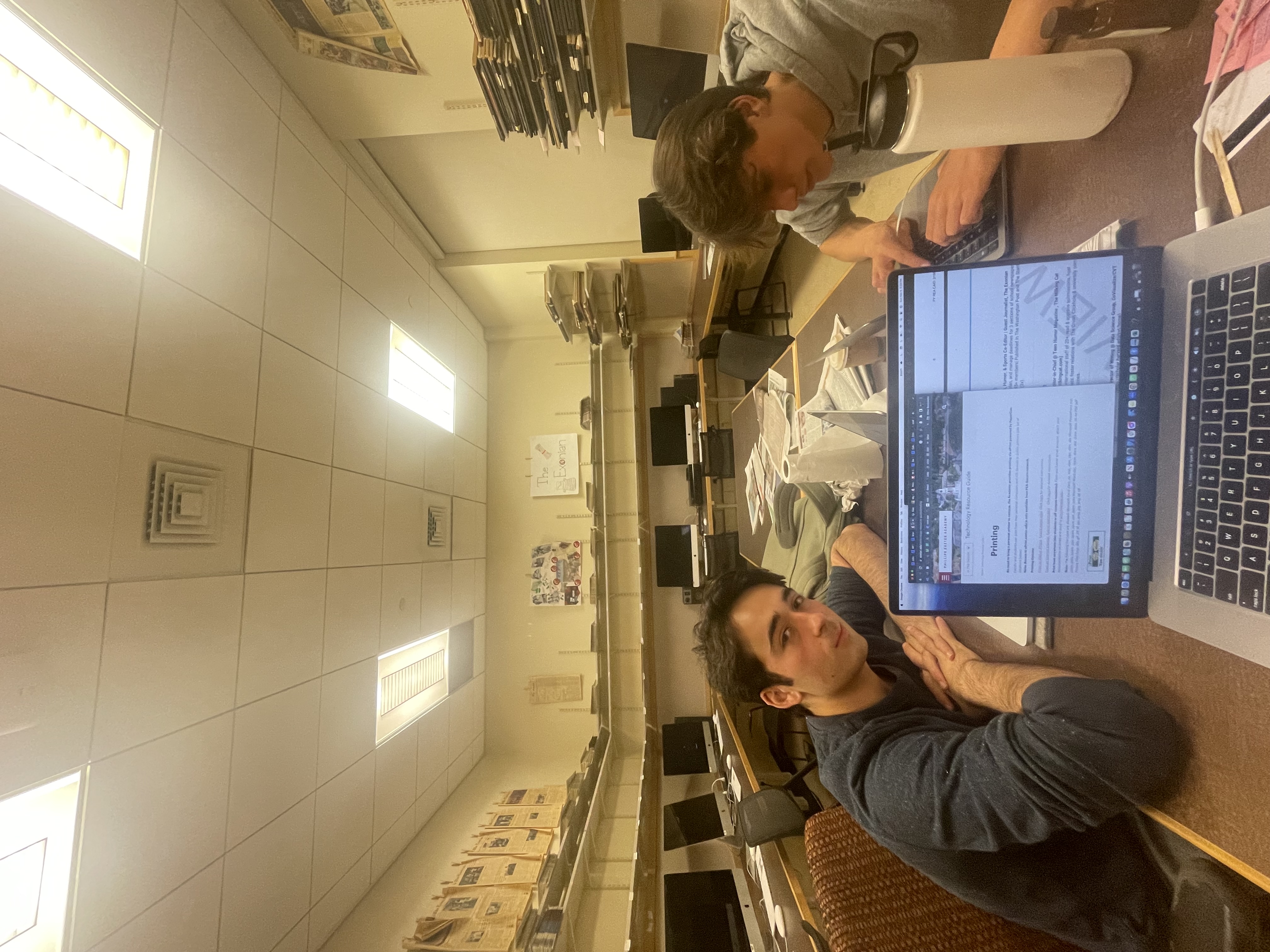
me hunter luca at The Exonian for no good reason